What is Mission-Critical Agentic AI?
With all the amazing news about the capabilities of AI, I have begun to become more interested in how AI will actually diffuse into the economy. As someone who has worked in the mission critical systems space, I thought it would be useful to figure out if AI Agents are/could move from stateless API calls into real autonomous decision makers in such systems. If not; then what needs to be worked on? If so, how will this change things?
For this first question I thought I should start with the former.
The next generation of AI applications won’t look like today’s chatbots and copilots. These won’t be front-end assistants for customer service or document summarization. They’ll be composite systems that chain together actions, services, and tools across departments, clouds, and even organizational boundaries.
That shift from short-lived interactions to long-running, cross-entity processes changes everything.
We will soon see AI workflows that manage loan approvals, automate insurance claims, orchestrate supply chains, or coordinate fraud detection, not in minutes, but over hours or days.
Suddenly, guaranteed delivery matters. Message durability matters. Auditability, retries, and failure isolation all become non-negotiable. These aren’t problems solved by prompt engineering or clever APIs. They demand robust, reliable messaging and coordination infrastructure.
Defining the problem space.
What do I mean by a mission critical system?
take MQ for example
Recent advances in model capability
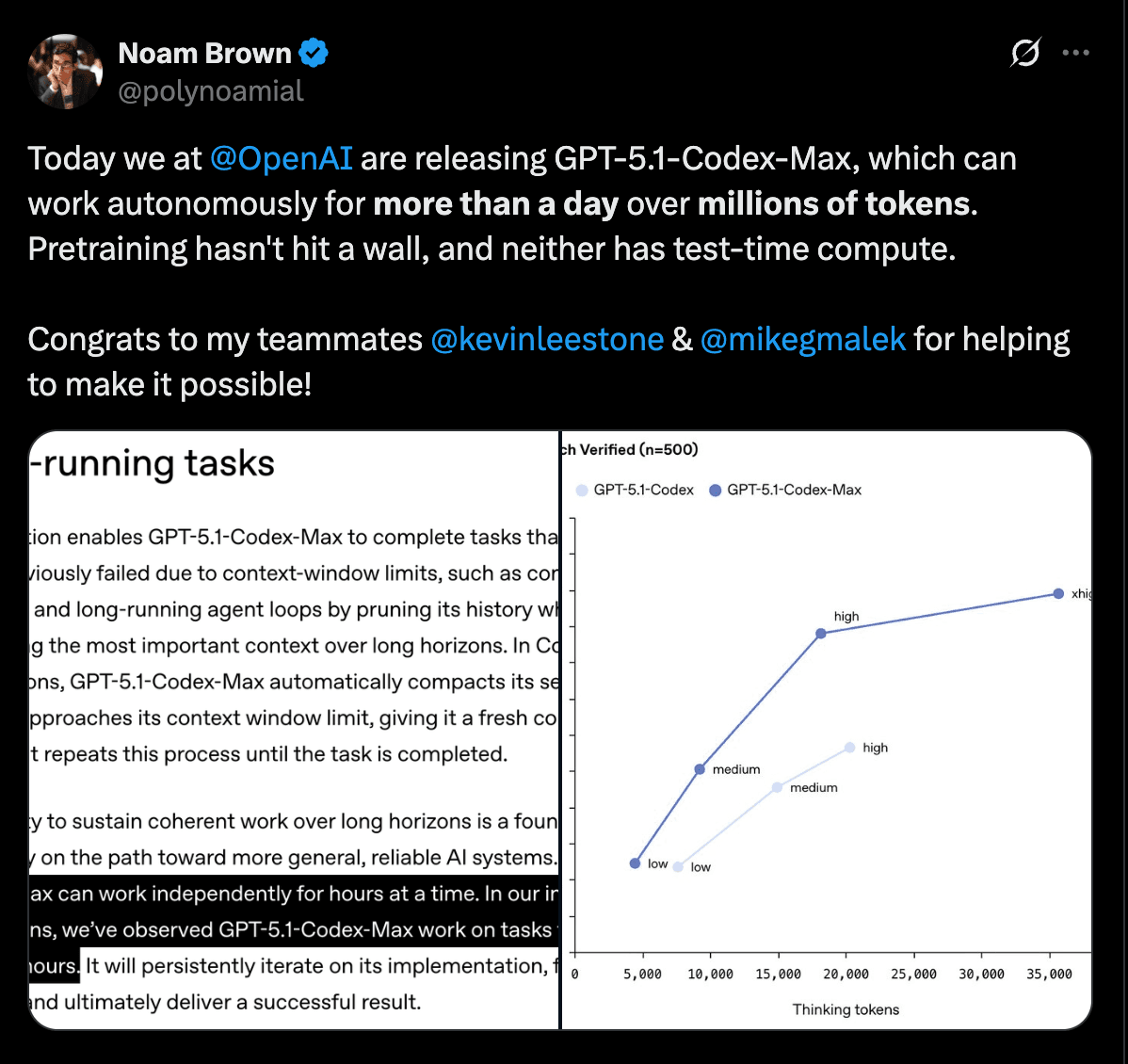
Recent evaluations make one thing clear: agents are no longer limited to short, stateless interactions. Systems like GPT-5.1-Codex-Max can sustain coherent work for hours. When they approach their context limits, they reorganize their own history to retain essential information and continue operating.
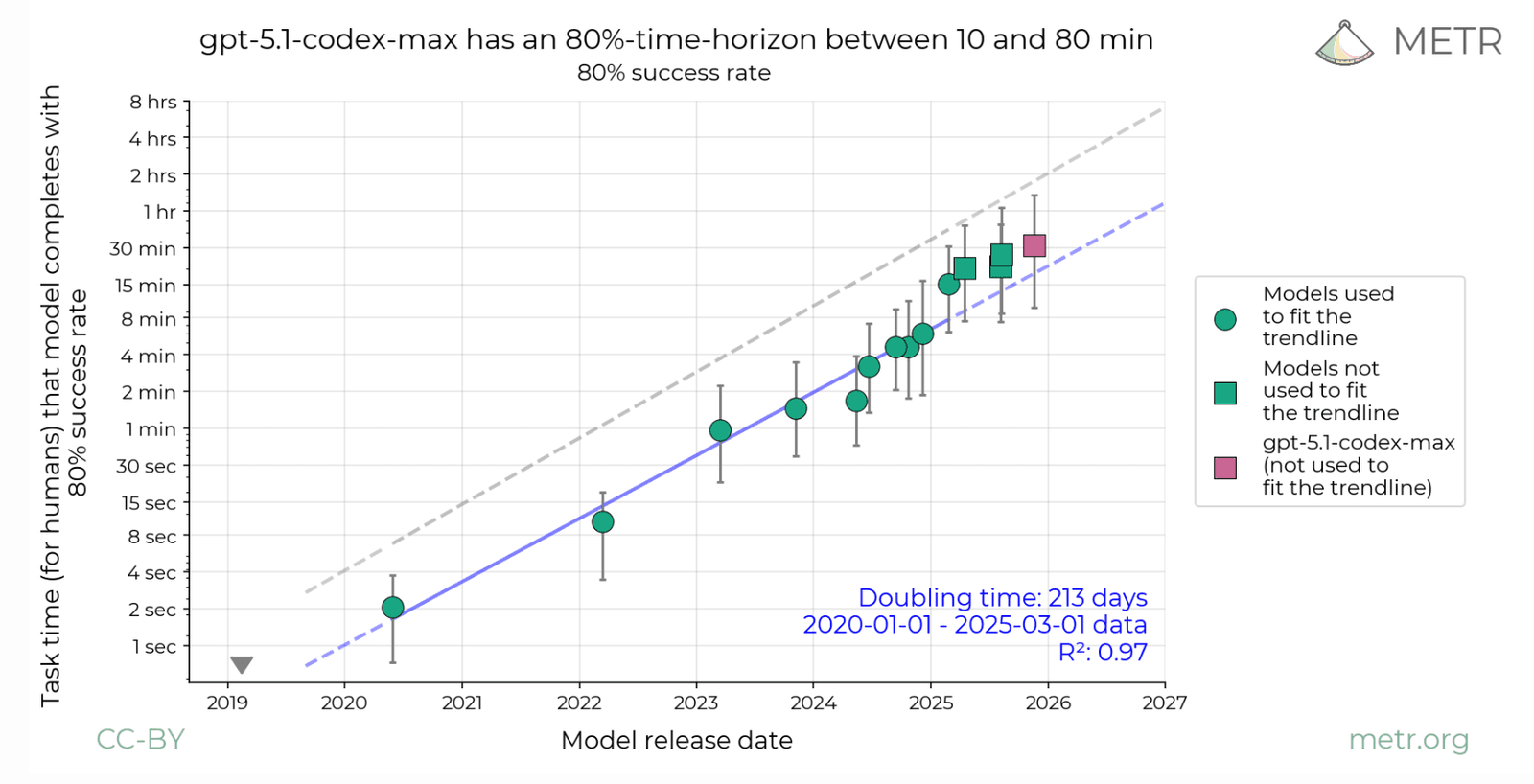
Independent assessments show median task lengths of several hours, with upper bounds well beyond that. Internal stress-tests have recorded uninterrupted runs exceeding 24 hours, during which the model iterates, debugs, and resolves failures autonomously.
Once an AI system can maintain a stable objective over long periods, its behavior stops resembling a chatbot and starts resembling an automated worker. It can follow multi-step plans, preserve intent across thousands of intermediate actions, and complete tasks that require sustained iteration rather than one-shot reasoning.
This shift exposes a structural gap. Current application stacks assume that model interactions are brief, disposable, and isolated. That assumption no longer holds.
Long-running agents require messaging and coordination infrastructure that can guarantee delivery, tolerate failures, retain state across retries, and support processes measured in hours or days.
The bottleneck is no longer model capability. It is the reliability of the systems surrounding it.
Most agents today are not operational systems
Most of what people call “agents” today are best-effort wrappers around a model: short-lived calls, no state guarantees, no ordering, no recoverability, and no control over side effects. If they fail, you retry the prompt. Nothing breaks downstream because nothing meaningful was at stake.
Mission-critical agents are different in kind, not degree. They must behave like components inside a distributed system: observable, recoverable, idempotent, and bounded in their failure domain. Their actions must be durable, ordered, and auditable.
When they call external systems, those effects must either succeed exactly once or roll back cleanly. Their internal state must persist across retries, restarts, and handoffs.
If they fail, something real breaks — money moves incorrectly, physical systems stall, regulatory processes corrupt, or cross-organization workflows deadlock.
At multi-hour horizons, the conversation is no longer about prompts or clever tool-use strategies. It becomes a systems problem: coordinating long-lived tasks, guaranteeing delivery, isolating failures, and ensuring that reasoning doesn’t drift or corrupt downstream state.
And unlike reasoning failures, which modern models can often recover from, infrastructure failures cannot be self-healed by the model. Without strong guarantees, long-running agents inevitably enter partial failure states they cannot reason their way out of.
The models have crossed the threshold. The infrastructure hasn’t. If an agent is capable of operating this long, its environment must deliver the same guarantees we expect from any component running a mission-critical workflow: durability, ordering, retries, observability, and isolation.
Without that foundation, long-running agents are unreliable by design, no matter how capable the model powering them becomes.
This is also where today’s ecosystem shows its limits. The emerging standards for agent communication, A2A and MCP, were designed for lightweight cooperation, not for agents that run for hours, coordinate across systems, or mutate state that actually matters. They assume stability where real-world systems guarantee turbulence.
The next articles dig into why today’s agent protocols break when you try to use them for mission-critical work, and what the infrastructure should look like instead.